Ship Handling & Manoeuvring
Nomoto modelling, heading response, turning behaviour, simulator development, and evaluation of vessel control characteristics.
Advancing ship safety through manoeuvring simulation, risk analysis, computational design, and emerging AI-assisted methods for safer marine systems.
BUET's student research on ANN-based hydrodynamic shape optimization with adaptive sampling received First Prize from the International Hydrofoil Society. The study demonstrates a research-stage computational framework for hydrofoil shape exploration, combining ANN surrogate modelling, adaptive sampling, and constrained optimization, with a clear pathway toward higher-fidelity numerical and experimental development.
The Ship Safety and Ship Handling Simulator Laboratory supports research and education in ship manoeuvring, marine accident analysis, navigational risk, passenger-vessel safety, and computational approaches to safer marine-system design. The laboratory uses modelling, simulation, numerical analysis, and data-driven methods to investigate how vessels can be designed and operated more safely.
An emerging research direction explores how ship geometry — including superstructure form — can reduce wind-induced aerodynamic loads, heeling moments, and vulnerability to capsizing in severe weather. This research-stage work uses theoretical and computational methods to build design knowledge and screening tools, with future expansion toward higher-fidelity CFD, physical experiments, and industry collaboration.
The laboratory also provides a platform for student design research. International competition results highlight academic design capability, sustained student engagement, and a growing portfolio of computational marine design. These achievements provide a strong foundation for future prototype development, validation studies, and broader professional application.
Nomoto modelling, heading response, turning behaviour, simulator development, and evaluation of vessel control characteristics.
Collision probability, grounding risk, bridge-passing performance, navigational-route assessment, and quantitative risk analysis.
Systematic examination of marine casualties, human and organizational factors, accident causation, and safety recommendations.
Safe and affordable ferry design, evacuation, survivability, accessibility, passenger comfort, and public-health considerations.
Research-stage design exploration using numerical solvers, surrogate models, machine learning, adaptive sampling, and optimization under engineering constraints.
Submarine accidents, failure mechanisms, survivability, emergency response, and lessons for underwater systems.
Exploring whether superstructure geometry can reduce wind forces and wind-induced heeling, thereby improving a vessel's theoretical safety margin in severe weather.
Active research · theoretical & computationalThe central question is how changes in above-water geometry may alter aerodynamic loading, heeling moment, and stability response, and how those relationships can guide safer superstructure concepts.
A resource-efficient surrogate-model framework for research-stage hydrofoil-section design using numerical data, artificial neural networks, adaptive sampling, and constrained optimization.
First Prize · IHS Mandles Prize 2026The study compares one-shot Sobol sampling with optimization-based adaptive sampling under the same final sample budget. The adaptive strategy concentrates new evaluations near predicted optimum regions rather than distributing them uniformly.

The simulator combines the Google Maps API with Nomoto’s K–T manoeuvring model to visualize and control a ship’s planar motion in real time.

The collision-avoidance work links algorithmic decision support for autonomous ships with evidence from inland-waterway collision characteristics in Bangladesh.
A marine traffic simulator on Google Maps using the Nomoto K–T model and real-time geographic visualization.
Read representative publicationCollision characteristics of marine vehicles in Bangladesh, providing an evidence base for collision-prevention measures.
Read representative publicationA systems-theoretic analysis of inland passenger-ship safety and the interactions among regulatory, organizational, and operational controls.
Read representative publicationA model for airborne SARS-CoV-2 transmission on the upper deck of a passenger ship and the implications for onboard prevention.
Read representative publicationA sustainable passenger-ship waste-management model incorporating biogas-composting and plastic segregation.
Read representative publicationData-driven modelling for marine engineering, including ship-design optimization, hydrodynamic surrogate models, repair-time estimation, and autonomous-navigation decision support.
Read representative publicationSelected for the BUET paper “Efficient Hydrodynamic Shape Optimization Using Artificial Neural Network-Based Surrogate Model with Adaptive Sampling Strategy.”
The recognition highlights student competence in hydrofoil engineering, computational design, surrogate modelling, and optimization, and marks a strong research-stage achievement with clear potential for further development.
The study parameterized a NACA0012 foil with eight Hicks–Henne design variables, generated numerical lift/drag data with XFOIL, trained an ANN surrogate, and used SLSQP to search for improved foil geometry under drag and area constraints.
Students associated with the laboratory have achieved sustained recognition in the Worldwide Ferry Safety Association International Student Design Competition for a Safe and Affordable Ferry. These are academic design projects that integrate ship design, stability and safety assessment, manoeuvring analysis, sustainable propulsion, and context-specific transport needs.
BUET teams received Third Place in 2021, Honourable Mention in 2023, Second Place in 2024, First Place (Championship) in 2025, and Third Place in 2026.

Cisne Rosa Express, a 300-passenger Ro-Pax ferry for the Amazon River, Brazil.

Green Falcon Express, a 100-passenger electric ferry for the Pasig River, Philippines.

Black Pearl, a 200-passenger Ro-Pax ferry for the Niger River route in Nigeria.

Najia Spirit, a 200-passenger electric ferry for the Lagos Inland Waterway, Nigeria.

A 200-passenger ferry for the Niger River route between Lokoja and Onitsha, Nigeria.
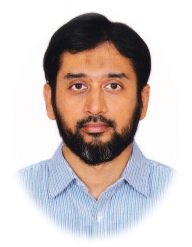
Exploring safer, smarter, and bio-inspired marine systems through engineering, simulation, and artificial intelligence
Professor
Department of Naval Architecture & Marine Engineering (NAME)
Bangladesh University of Engineering & Technology (BUET)
Dhaka 1000, Bangladesh
